
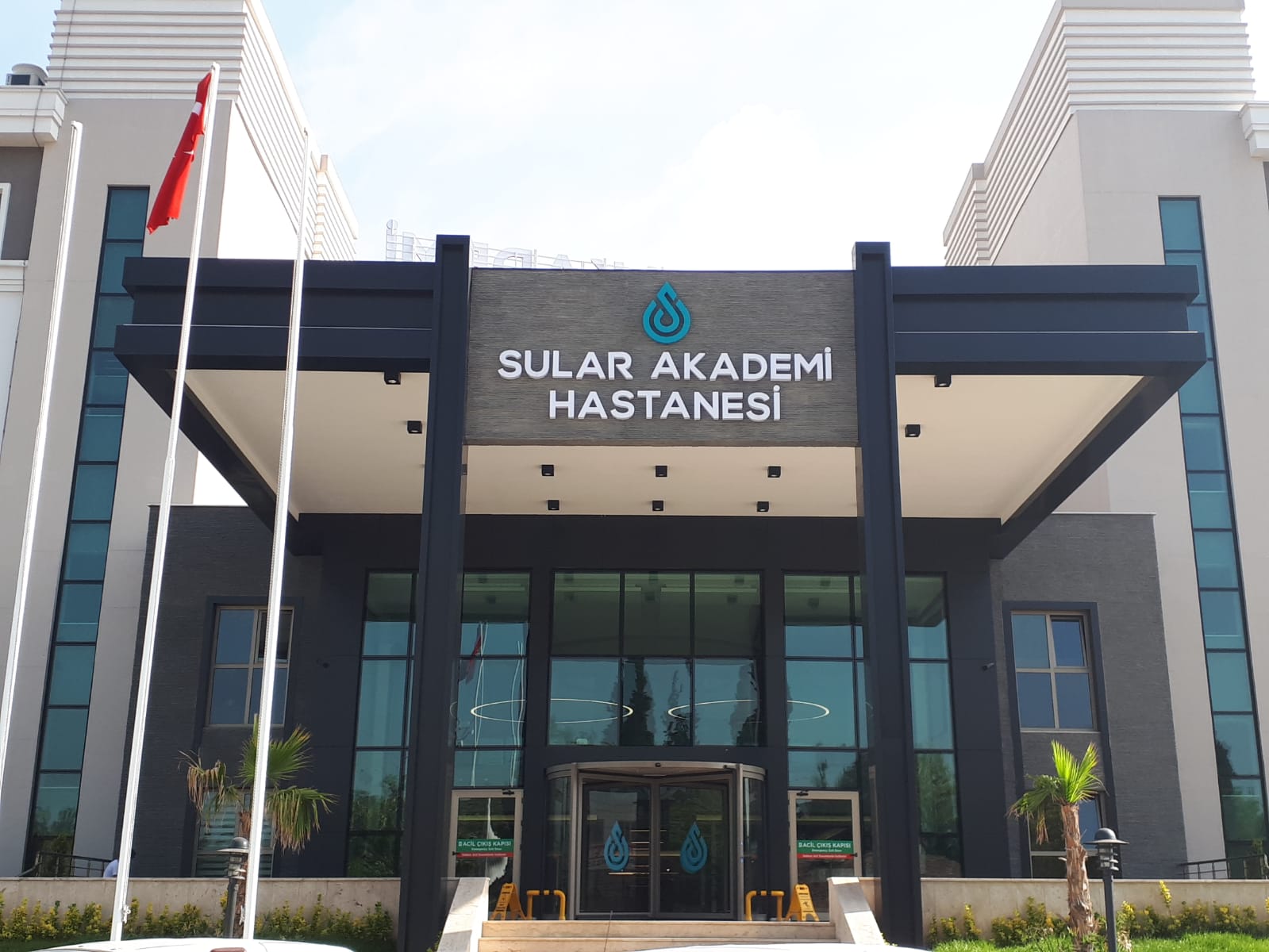
Sular Akademi Hospital
Registered locally in Turkey as Özel Sular Akademi Hastanesi
Sular Akademi Hospital in Kahramanmaraş provides aesthetic and medical hair transplant solutions within a hospital setting. The clinic leverages modern medical technologies and expert staff to offer FUE, Sapphire FUE, and DHI techniques, prioritizing sterility and patient safety.
Sular Akademi Hospital in Kahramanmaraş offers aesthetic and medical solutions for individuals experiencing hair loss. This multi-specialty hospital combines modern medical technologies with an expert team to meet the hair transplant needs of the region. Procedures are performed in a hospital environment, adhering to the highest standards of sterilization and patient safety, aiming to provide lasting solutions that restore patients' confidence. The hospital’s vision emphasizes personalized planning to achieve optimal results tailored to each patient's facial features and donor area capacity. Sular Akademi utilizes modern medical equipment and experienced staff to provide trusted services, adhering to scientific methods regardless of the stage of hair loss. They offer FUE (Follicular Unit Extraction), Sapphire FUE (using sapphire-tipped blades for minimal scalp trauma and denser implantation), and DHI (Direct Hair Implantation) with Choi pens, which allows for direct graft placement and is ideal for densification or for patients who prefer not to shave. Strategically located in the city center of Kahramanmaraş, the hospital is easily accessible for patients from within the city and surrounding areas.
Techniques offered
Clinic data sheet
1/16 fields verifiedCompiled from the clinic's own published material, its registered technique list and public Google data. Fields we could not verify are left blank rather than guessed.
- Techniques offered
- FUE Hair Transplant, DHI Hair Transplant, Sapphire FUE
- Procedures performed
- Not disclosed
- Patients per year
- Not disclosed
- International patients
- Not disclosed
- Medical team
- Not disclosed
- Procedure duration
- Not disclosed
- Anaesthesia
- Not disclosed
- Maximum grafts
- Not disclosed
- Female hair transplant
- Not disclosed
- Afro / curly hair transplant
- Not disclosed
- Beard & moustache transplant
- Not disclosed
- Revision / repair surgery
- Not disclosed
- Graft guarantee
- Not disclosed
- Accreditation / licence
- Not disclosed
- Surgery video
- Not disclosed
- Before-and-after archive
- Not disclosed
Considering the Kahramanmaraş Context
Sular Akademi Hospital is situated in Kahramanmaraş, a city distinct from Turkey's primary medical tourism hubs like Istanbul or Izmir. This geographic location could offer a more localized experience, potentially with fewer international patients simultaneously, which some might prefer for a quieter recovery environment. However, prospective international patients should realistically assess travel logistics, including flight connections to Kahramanmaraş, as direct international routes are less common than to larger Turkish cities. While local transport from the city centre address is convenient, patients should inquire about airport transfers and accommodation options in Kahramanmaraş, as dedicated medical tourism packages might differ significantly from those offered in more established destinations. Understanding the city's infrastructure for visitors is crucial for planning. Before committing, consider whether the advantages of a potentially more focused local experience outweigh any additional travel planning.
Interpreting Patient Feedback and Volume
With 481 reviews and a 3.1 Google rating, Sular Akademi Hospital demonstrates a substantial patient feedback volume. This quantity suggests a busy hospital, generating ample public opinion. A rating of 3.1, while not exceptionally high, indicates a mixed sentiment among reviewers. International patients should approach this data with nuance. It is vital to consider the cultural context and the demographic of the reviewers, which may largely comprise local Turkish patients whose expectations and priorities might differ from those of international clients. As this directory does not provide direct access to individual reviews, prospective patients should actively seek out and translate a diverse range of these reviews, focusing on recurring themes related to service, results, and aftercare. Do not rely solely on the numerical rating; delve into the specifics to understand the experiences shared.
Technique Offerings and Suitability
The clinic's listed techniques – FUE Saç Ekimi, DHI Saç Ekimi, and Safir FUE – indicate a comprehensive range of contemporary hair transplant methods. FUE is the standard follicular unit extraction, while Sapphire FUE offers potentially finer incisions, and DHI allows for direct implantation without pre-made channels, often favored for specific densification needs or non-shaving requirements. What is not explicitly stated is which technique might be most suitable for different hair loss patterns or patient goals. As no package range is provided, it is essential for patients to understand if all three techniques are offered at distinct price points, or if the choice is solely based on medical suitability. Given the absence of graft numbers or explicit 'before & after' expectations, patients must clearly communicate their specific hair loss scenario to the clinic to ascertain which technique is recommended for their case and what outcomes can realistically be expected.
What to ask before you book
- • What specific travel and accommodation support, if any, does Sular Akademi Hospital offer for international patients arriving in Kahramanmaraş?
- • Could Sular Akademi Hospital provide examples of patient results for each of the FUE, Sapphire FUE, and DHI techniques, particularly for cases similar to my hair loss pattern?
- • What is the average number of grafts typically performed with FUE, Sapphire FUE, and DHI at Sular Akademi Hospital, and how does the clinic determine the optimal number for individual patients?
- • Given the 3.1 Google rating, what common patient concerns or areas for improvement have been identified by Sular Akademi Hospital, and how are these being addressed?